The I AM is With You
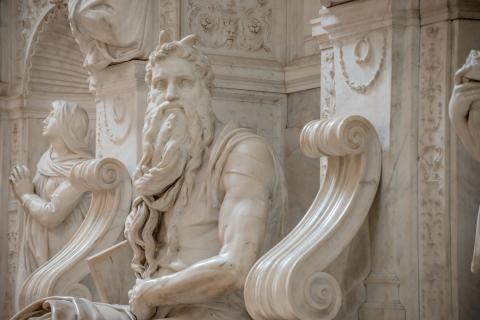
"Now Moses was tending the flock of Jethro his father-in-law, the priest of Midian, and he led the flock to the far side of the wilderness and came to Horeb, the mountain of God. There the angel of the Lord appeared to him in flames of fire from within a bush." (Exodus 3:1-2a)
So begins one of Scripture's most memorable encounters. The burning bush captures Moses's attention and sets the stage for his calling as Israel's deliverer. It is one of the most iconic of all the Old Testament commission stories.
Moses's Background
What follows fascinates us. The former prince of Egypt—delivered from death as an infant in a reed basket, raised in Pharaoh's household, forced to hide as a shepherd in the foothills of Horeb—stands face to face with the living God. God makes his plan plain, and almost immediately Moses's fascination turns to fear.
Five Objections
Biblical scholars note five distinct objections Moses raised. His reluctance escalates progressively: from insecurity (Who am I?, Exodus 3:11); to theological doubt (Who are you?, Exodus 3:13); to fear (What if they don't believe me?, Exodus 4:1); to excuses (I am not eloquent, Exodus 4:10); to outright refusal (Please send someone else, Exodus 4:13). At every turn, God responds not with frustration but with grace, offering presence, revelation, power, and provision.
In time, Moses relents, and the prince-turned-shepherd becomes the defining leadership figure of the Old Testament.
Parallels with Jesus
Scholars have long noted the intentional parallels Matthew’s Gospel draws between Moses and Jesus. Both escape a tyrant's death sentence as infants. Both are tested in the wilderness. Both lead a fickle, wavering people. Both deliver God's revelation from a mountain. Matthew wants his readers to see Jesus clearly as a new and better Moses. Jesus is a deliverer for his people not from mere Egyptian bondage but from the slavery of sin and death itself. Jesus offers not only freedom but also redemption and an eternal promised land for all who receive him as Lord.
Parallel with the Great Commission
There's another parallel I can't get past that hits closer to home.
As Jesus stands on the mountainside at the close of Matthew's Gospel, he issues the Great Commission: "Go and make disciples of all nations . . ." (Matthew 28:19). Yet even after the miraculous resurrection, Matthew slips in this jarring detail: "When they saw him, they worshiped him; but some doubted." Firsthand witnesses, standing before the risen Christ– still doubted. There's something unmistakably Moses in that scene.
Finding Ourselves in the Story
Moses stood at a burning bush and pushed back on the God of the universe. And I think we do the same. Believers like you and me stand in the presence of the risen Jesus, read his words that were clearly intended for every follower, and feel the same objections rise up.
Who am I? God has much better options than me. Who are you, really? Can I actually trust you, Jesus? What if they don't believe me? It'll just be awkward. I don't know what to say. I'm not good at this.
These aren't modern insecurities. They're as old as Moses and the exodus. And if the statistics on discipleship tell us anything, the most common response to the Great Commission is still the last line from Moses's script: "Please, send someone else."
God's Answer
But God's answer to Moses was twofold, and it still holds. To Moses's self-doubt, God said simply: "I will be with you." Nothing is impossible when God is with us. And to Moses's question about identity, God answered: "I Am Who I Am. . . . Tell them the I Am has sent you." These aren't ancient reassurances with an expiration date; these promises are as fresh today as they were on Mount Horeb.
Closing
One final Matthean echo brings it all home. Don't skip past the promise Jesus attaches to his commission. The grammatical parallel to Exodus 3 is intentional: just as God told Moses, "I will be with you," Jesus says to his disciples and to us, "And surely I am with you always, to the very end of the age."
We don't stand before a burning bush. But we carry the holy fire of God's Spirit within us, empowering us for whatever he asks, but especially this: making disciples in Jesus's name. So, as you go, let the promise echo across the centuries. The I Am is with you.
Sam Barber is director of Nazarene Discipleship Internationa