From Creation to Commission

The Church of the Nazarene was born in the height of the Industrial Revolution.[1] Though gradually being replaced by technology, the machines and systems of the Gilded Age still exert a profound influence over us. Our automobiles may be rolling computers these days, but most of them still run on an internal combustion engine. Hotels may be awash in LED screens and smartphone apps, but the upper floors are accessible by the elevator invented in the 1850s. Look carefully, and you can find Industrial-age machines grinding along beneath the technological surfaces of our world. Perhaps, for some of us, this industrial mindset creates a troubling impact on our approach to discipleship.
In a recent conversation with some Nazarene theologians, I voiced my struggle with Jesus’s use of the word “make” in the Great Commission. To my post-Industrial ears, “make disciples” felt a bit mechanistic—fostering, despite my mental objections, images of assembly lines. Assembly-line discipleship couldn’t be further from what I’m sure Jesus intended. His own ministry with the Twelve makes this clear. These thoughtful leaders pointed me to an artist and theologian who helped me see a fresh perspective on “making disciples.”[2]
Genesis 1:1 says: “In the beginning God created the heavens and the earth.” The Hebrew word for “created” in this passage is bara, which emphasizes God’s divine power in creating everything. Later, when the Jewish population had scattered over the region due to persecution and economic factors, the Bible was translated into the dominant language of the empire, and in place of the Hebrew word bara, the Greek word poieo was used. This word is translated very simply as “to make” and is, importantly, the same word Jesus uses in the Great Commission. If this brief language study seems irrelevant, let me offer a key that unlocks the secret to “making” disciples.
To better grasp the concept of making disciples in the Great Commission, we must understand God making everything in Genesis 1. God created the world out of gratuitous love. Gratuitous, in this sense, recaptures its classic meaning, “unnecessary or without cause.” Most simply, God created as an extravagant expression of divine love and gave humanity dominion over all creation. But the biblical sense of dominion isn’t power and force. It is, instead, loving stewardship. The man and woman were commissioned by God to lovingly steward all that God had made. Imagine God, creation’s artist, entrusting all he had made to humans. The love and trust are astonishing!
When we carry the meaning of “made” in Genesis all the way over to Jesus’s Great Commission, we see something beautiful. When Jesus commissions us to join him in making disciples, he isn’t speaking about power and force—the kind of making done on a factory floor. He is speaking about making in the Genesis sense; stewarding the life-giving work of our artist-creator God.
What God did in creation, God does in new creation (see 2 Corinthians 5:17). In Genesis God made and then entrusted the creation to us to lovingly steward. In God’s new creation, God saves and entrusts the new believer to us to love, nurture, and steward into the fullness of grace.
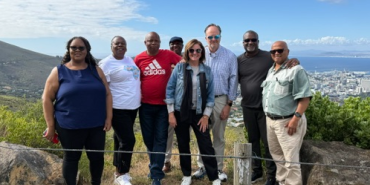
Our efforts at discipleship cannot become industrialized programs that we push people through. We must never become satisfied with checking boxes and reporting statistics as the extent of our discipleship. In the biblical sense, Genesis teaches us that discipleship is lovingly stewarding God’s new creation into an ever-deepening relationship with the Creator. Since Jesus stood on a mountainside and commissioned us, I’m inviting God’s Spirit to renew my mind, helping me to make disciples after the pattern of Genesis.
Sam Barber is director of Nazarene Discipleship International.